


Mousses are rich delicious melt in the mouth confections. I naively set out to find the perfect mousse recipe for a chocolate and strawberry mousse. A quick google search showed mousses of two types, with gelatin (See Le Tartine Gourmandes example)and mousses with eggs.
Traditionally mousses, more specifically chocolate mousses are made with egg yolks. The egg yolks impart a dense and creamy quality to the mousse. Fruit mousses on the other hand have gelatin in addition to the egg yolks.
I also tested a chocolate mousse recipe with just gelatin and no egg yolks, Have to say it lacked the smoothness of an egg yolk mousse. But for vegans and those who donot plain like egg yolks it is a compromise of sorts.
Ive included below two recipes,- both by Jacques Pepin in The Art of Cooking Vol 1- one for a chocolate mousse and another for a red currant mousse which i adapted to make a strawberry mousse. Im still looking for that perfect recipe for fruit puree mousses.
Chocolate Gourmand(mousse) by Jacques Pepin
1 cup heavy cream
6 oz bittersweet or semi sweet chocolate
1/3 cup milk
2 egg yolks
2 tsp dark rum
1 egg white
2 tb granulated sugar
Topping
1/2 cup heavy cream
2 tsp confectioners sugar
Garnish
Candied Violets
Method
In a mixing bowl, whip the 1 cup cream until lightly firm( donot overbeat) Meanwhile place the 6 oz chocolate with the 1/3 cup milk in a saucepan and place over medium heat until the chocolate has melted and the mixture is warm and smooth. Add the 2 egg yolks to the chocolate with the 2 tsp rum and mix. The chocolate will thicken lightly. In another bowl, beat the egg white until firm, then add the 2tb granulated sugar and keep beating until firm and smooth.
Pour the chocolate mixture into the beaten egg white and stir with a whisk just enough to incorporate. Add the whipped cream and fold in gently just until mixed.
Pour the mixture into an attractive serving bowl and refrigerate for approximately 1 hour. When the top starts to harden cover with plastic so the chocolate doesnt pick up tastes . Referrigerate until firm.
Make whipped cream from the topping ingredients. Decorate with candied violets.
Currant Filling ( Currant Mousse) by Jacques Pepin
11/2 lb fresh red currants ( about 2 cups puree)
4 egg yolks
1/2 cup sugar
1/4 cup cold water
2 envelopes gelatin
4 tb water
3 egg whites
2 tb sugar
Puree the currants. Place the 4 egg yolks in a mixer fitted with a whisk beater. Put the 1/2 cup sugar with the 1/4 cup cold water in a saucepan and stir just enough to dissolve the sugar. Place on the stove, bring to a boil, and cook for about 4 to 5 minutes,, until the mixture will spin a thread( about 230 degrees F on a candy thermometer). Pour the hot syrup into the yolks slowly while beating at a low speed. Increase to high and continue beating on medium to high for 10 minutes.
The mixture should be thick and creamy. Meanwhile combine the 2 envelopes of gelatin with the 4 tb of cold water and let set until the gelatin absorbs the water. Melt the softened gelatin over low heat and when the gelatin is well melted add it to the 2 cups of red currant puree , mixing it well with a whisk. Now combine that currant gelatin puree with the egg yolk sugar mixture , mixing it with a whisk.
Beat the 3 egg whites until stiff, add the 2 tb of sugar, and beat again for about 30 seconds to incorporate the sugar into the whites. Spoon about one fourth to one third of the egg whites into the red currant mixture and mix with a whisk. Using a rubber spatula gently fold the rest of the egg whites into the red currant puree.
5.19.2007
Test Kitchen : A tale of two Mousses
3.20.2007
Devils Food Layered Chocolate Cake

Ive been away from the blog a couple of months now,welcoming the pitter patter of little feet in my life! Every moment since has been a joy and needless to say really hectic. When every moment in life is a celebration, you need cake.
Heres a quick recipe that i baked up for my little ones 3 month birthday( I know, a little- okay a lot over the top).
The Devils Food Layer Cake
To make one 9 inch cake
10 tbsp butter
11/2 cups sugar
3 eggs yolks separated from whites, whites stiffly beaten
2/3 cup cocoa powder dissolved in 1/2 cup hot water
1/2 tsp baking soda
1 cup buttermilk
2 cups sifted cake flour
2 tsp baking powder
1 tsp vanilla extract
Recipe adapted from my favorite cake cook book, Cakes.
Cream together the butter and the sugar. Beat the egg yolks well and stir them into the creamed mixture. Dissolve the soda in the buttermilk. Sift together the flour and baking powder, then add the flour to the creamed mixture alternately with the dissolved cocoa and the buttermilk mixture. Add the vanilla extract. Fold in the egg whites. Divide the batter evenly between two buttered and floured layer cake pans. Bake in a preheated 350 F oven for 30 to 5 minutes or until the top of the cake is springy to the touch. When the cake is cool, proceed to frosting.
For the frosting you can do as I did , use simple butter cream for the moldings and rich butter cream on the cake.The recipes for the butter creams follow.
Simple Butter Cream(Chocolate)
to make about 2 cups butter cream
9 tbsp unsalted butter, softened
41/2 cups confectioners sugar
6 tbsp light cream
11/2 tsp vanilla extract
2 oz unsweetened chocolate morsels( I used ghirardelli)
Beat the butter until it is fluffly. Gradually beat the sugar into the butter, alternately with the cream, until the sugar is absorbed. Beat in the vanilla extract. To flavor with chocolate, melt the chocolate morsels in a double boiler, cool slightly and fold it into the prepared butter cream. The butter cream should be of spreading consistency. If it is too thin beat in a little more sugar, if it is too thick , beat in a little cream.
Rich Butter Cream ( Chocolate)
to make 2 cups butter cream
1 cup sugar
1/2 cup water
5 egg yolks beaten
1/2 lb butter, softened
1 tbsp vanilla extract
3oz chocolate
Stir the water and sugar together in a saucepan set over medium heat until the sugar dissolves and the liquid comes to a boil. Let this syrup boil without stirring until its temperature reaches 217 - 220 F on a candy thermometer. If you donot have a candy thermometer you can eyeball it by putting the hot syrup in a bowl of cold water and checking to see if small threads form. Remove syrup from the heat. Whisking vigorously, or using a electric beater, pour the hot syrup into the egg yolks and continue to beat until the mixture is cool, light and fluffly. Donot forget to beat vigorously or you will end up with scrambled eggs! Cream the butter until it is very soft, then beat the butter and the vanilla extract into the yolk mixture until the mixture is shiny and firm enough to spread.
some tips: I have found that it is best if you have two or three sets of beater blades, cooled in the freezer and waiting so you can work without having to wash, and more importantly without warming your beater blades. Always use a drop or two of lime juice with your egg whites.
Bon Appetit!
11.26.2006

11.10.2006

10.27.2006

Broccoli Soup
 For Broccoli Haters( yes with a capital H :)) this soup will come as a very pleasant surprise. It is easy to make and has a nutty and deep flavor with none of the nasty texture of the vegetable.
Makes one bowl, Increase proportionately
1 Cup Broccoli Florets
1 pod garlic
Salt & Pepper to taste
Grated cheese to garnish
Heavy Cream ( optional)
I usually use the frozen broccoli florets i buy at the supermarket for this soup. It is really important in that case to not defrost the florets in the microwave but put them in a heavy saucepan with a pinch of salt on the stovetop at a low temperature. Also keep the saucepan covered. For some reason defrosting the florets in the microwave entirely ruins the texture of the final product and makes it very fibrous instead of smooth.
I cook the florets until just about thawed. It is important to avoid adding water to the saucepan. Make a nice puree with the thawed florets in the blender.
In another sauce pan on the stove i quickly grate the pod of garlic into some olive oil, wait until the olive oil is infused with the garlic , add the puree . Give the whole thing a single boil. Salt and season to taste.
Serve with a garnish of cheese and some garlic bread. Other infusions could be chives or some basil.
10.20.2006
Happy Diwali!!
 A very happy diwali to everybody. Here's a typical Diwali bachanam recipe - Chettiar style ribbon from Salem in Tamilnadu , India. Best on diwali or any rainy day. It is different from other ribbon in its smoother almost silky texture and a very slight sweetness which depends on whether your coconut milk is store made or home made.
For newbies, the tall steel thingie is called an acchu - a modern variant of an old device - sort of like a cookie maker with different molds for pressing out different shaped fried objects ! :) Reminds me of the old joke - UFO is an unidentified fried object.
Ingredients are simple,
Rice flour
Coconut milk ( fresh or store bought)
Sesame seeds
Kadla Parappu
Rice Powder and Kadla Parappu should be in the proportion of 3:1 . Grind the kadla parappu into fine powder. Add sesame seeds and salt to season. Red Chilli powder is optional. Knead the flour using as much coconut milk as you require. Heat oil in a deep pan , use the slotted plate in the Acchu to squeeze out the dough into hot oil.
Voila - Deepavali bachanam Ribbon!! Enjoy madi.
10.15.2006
Unusual Cookbooks
 I apologize for being MIA. Here is a short ice breaking post on the unusual cookbooks ive run into so far :
Revolting recipes by Roald dahl.
One of my friends brought this unusual book by Roald dahl to my attention. I love all his writing, from Charlie and the chocolate factory to Switcheroo. This cookbook entices children into the kitchen with quirky humor and even quirkier recipe names - Mosquito mudpie being one - if memory serves right.
The other unusual cookbook is based on the popular soap, The sopranos and features recipes from Steak pizzaiola to pasta fagioli.
The last book is from an unusual blog http://foodcompanycookbooks.blogspot.com/ devoted to food company vintage cookbooks and advertising. In the context of India, this is really a concept that has very little weight. Who reads the recipe book that Prestige sends along with their pressure cookers? Does anybody really?
9.07.2006
Mirepoix and Soup!

Fall is tiptoeing in behind Ernesto. Days are bright but lightly tinged with that hint of chill in the air. No kidding folks, the first of the Soups have been sighted. Soups are shy creatures , who venture out to provide warmth when the Big chill threatens to start. Notoriously difficult to photograph, they have been known to hide their bright flavors and warmth in photographs which look like muddied waters.
:) :)
Ive begun with a few classics, but I donot have photographs of the finals. I gave up - they come out as indistinct muddy juices.
The first is
Mirepoix, A classic French Stock:
Equal parts of celery, onion and carrots to be boiled with aromatics - mint, basil , oregano. Pick your choice.
Mushroom and Onion Soup:
Take three large onions, slice finely. Take a soup pot with a thick bottom , saute the onions in plenty of butter on very low heat until the onions brown to a nice golden color. Donont burn / blacken the onions. Add sliced mushrooms ( white button / portabella ). Saute for another 2 minutes. Add stock, bring to a boil. At this stage salt and season with black pepper to taste. This is a "thin" soup.
Vegetarian Minestrone Soup:
Take the same combination of carrots, celery and onions as in the stock . Take a generous helping of olive oil in the soup pot, add these vegetables. In addition add sliced mushrooms. Saute until vegetables are nicely roasted and soft. Add stock , bring to a boil. Add aromatics, I used mint this time. Add a tbsp or so of tomato paste. At this point you could add either boiled pasta of your choice or boiled barley. Season with salt and black pepper to taste -Voila, soup is ready!! It is really amazing how flavorful this soup is. Roasting and adding the same vegetables really highlights the basic flavors of this soup.
Chinese sweet corn soup:
Saute sweet corn, chopped green chillies to taste and fresh green onion in sesame oil. In another pot bring about two cloves of garlic and an inch of ginger, both finely chopped or grated to boil in a pot of stock. Once the water has boiled, filter the stock out into the pot with the corn and green onion. Thicken with about a tbsp of corn flour. Season with salt.
Enjoy!
8.28.2006
Pineapple cake

Pineapple Upside down with fresh home made whipped cream:
I made this last night in about under an hour, with the recipe from lindystoast. As baking goes, the upside down cake ranks with apple pie and all things americana. I found recipe variations with different fruits- pear and apples. I added some cinnamon to the recipe and reduced all proportions to 1/3rd. Its difficult cooking for two!!


8.21.2006
Black Forest Cake

http://www.flickr.com/photos/seian/3867454/in/set-201582/
I made this black forest cake today from recipe posted at the link above. It took me about an hour and a half . I referigerated it for a couple of hours before cutting and smoothing the edges. Oh and two touches not in the recipe- I added a touch of lime juice while beating the eggs for extra stiffness and i used cake flour not all purpose. thanks for a wonderfully easy recipe!!
8.18.2006
Fruit: An illustrated History by Peter Blackburn Maze
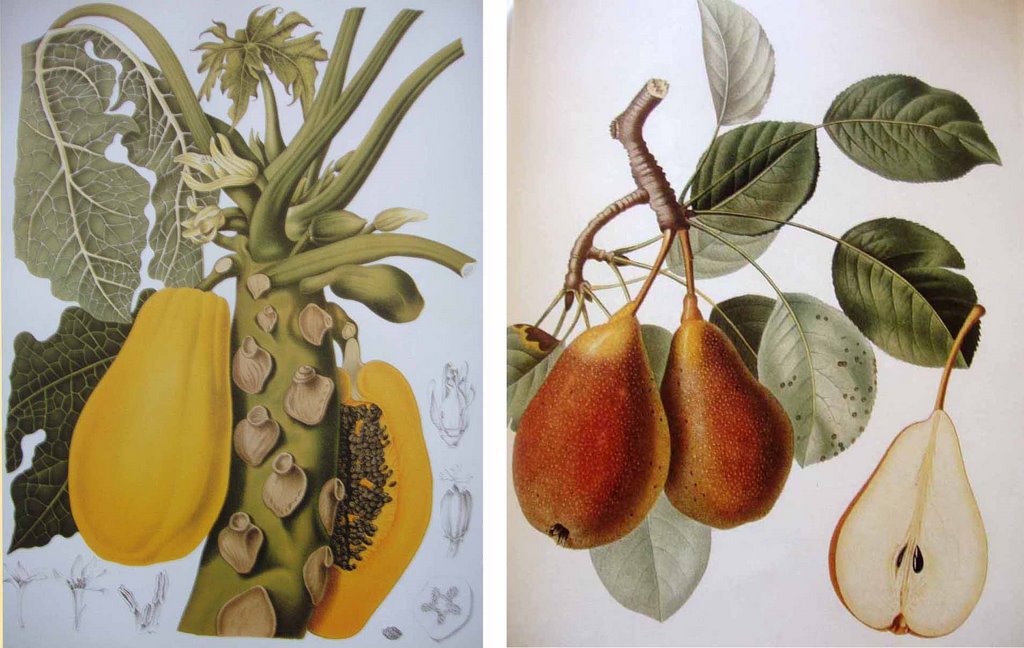
 Book Review :
A glossy coffee table book about what else :) fruits with average text but beautiful pictures...
Fun facts from this book:
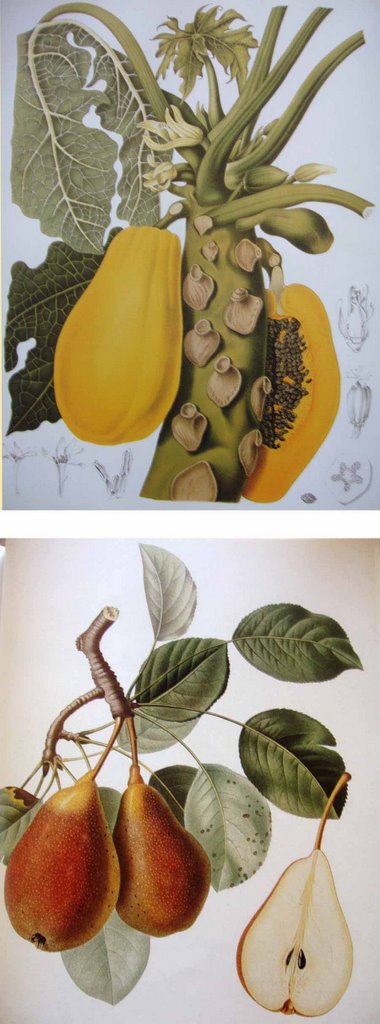
- Todays Citrus fruits probably arose from about a dozen wild species that originated in the region encompassing South East Asia and India.
- The scientific names of the pineapple - Ananas comosus and the Chickoo - Manilkara Sapote are surprisingly enough prevelant as common names in India. Pineapple and Chickoo are called Ananas and Sapota respectively in Gujarati.
Click on the Images to see a larger version.
8.13.2006
Khichado
 Entry for Mahanandi Independence Day Food Parade::
KHICHADO:: from Gujarat
A very happy Independence day to all!
Since Ive only been cooking for the last couple of years, the word traditional / classical "food" really threw me for a loop. In between desperately dredging up memories of grandmas cooking and phone calls to the motherland i was struck by an epiphany, what is traditional in Indian cooking?
Our culinary traditions have been handed down generations orally, from mother to daughter (mostly- i think!). Fragments of memory and little modifications along the way, but at best we have a comprehensive culinary record of what - the last two hundred years? Vegetables like tomatoes and potatoes arrived in India after the new world, i.e the americas were discovered. It is our ability to transform whatever is at hand into something that our heart immediately knows is ours - ' Indian', if you want to call it that is perhaps the cornerstone of all indian cooking; something that unites all Indian states and regions.
Nuff ruminations already!! What I have here for Independence day is a really really authentic, real deal Gujarati recipe called Khichado. It is traditionally made for January 14th , Makarsankranti or Kite flying mania day, with young wheat berries from the famous Bhal wheat growing region of Gujarat. Best part is, it is both a recipe for a single dish and a meal in itself. I would recommend it as a good breakfast porridge.
Ingredients:
1 cup spring wheat berries ( available at your local organic co-op)
1/2 cup Toor dal or Tuver dal
Handful raw peanuts
2 dried dates(kharek) or fresh dates
Pinch Haldi/ Turmeric
Red Chilli powder to taste
1/3rd cup fresh coconut
Ghee
Seasoning:
1 tbsp ginger
Green Chilli to taste
Ajwain
5 Cloves
2 inch Cinnamon
Sugar(optional)
Soak the wheat berries in warm water overnight or for six hours minimum. Boil in the cooker with some extra water. Remove. At this point you could either give it a quick whirl in the mixer or pound with potato masher to make the wheat berries less chewy. I prefer the chewy texture and leave it as such. Cook the tuver dal / toor dal with the kharek or fresh dates, a pinch of salt , the handful of peanuts, and the coconut . In a pan take as much ghee as your arteries can stand, and add the seasonings in the following order - ajwain, cloves & cinnamon, ginger and finally green chilli. Combine the wheat berries, tuver. Add a pinch haldi or turmeric, red chilli - give it a quick boil. Add seasoning and serve.
Usually Gujarati food is a combination of salt and sweet. If you wish you can add more sugar preferably brown. Traditionally khichado is served with finely diced cucumber and onion as a meal in itself. Enjoy!!
7.28.2006
Indian Oil
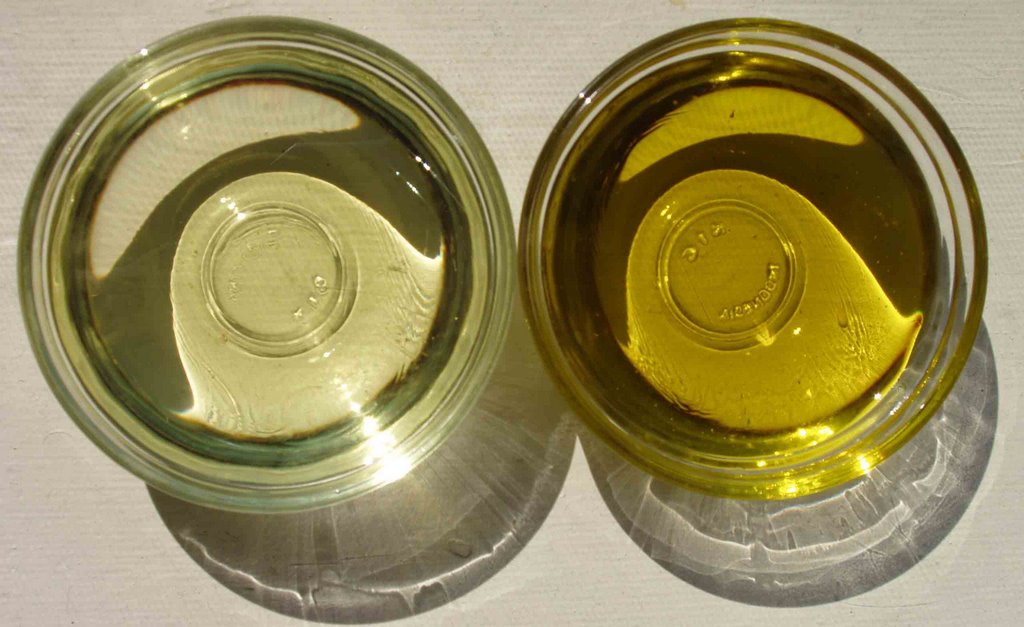
This post is in response to feedback on my earlier post : Stolen Harvest by Vandana Shiva.
When I vacillate between the tempting cold pressed olive oil and the prosaic canola at the supermarket, I struggle between two priorities - the healthiest and the most cost effective. This is a familiar recurrence of opposites, health and economics.Turns out what is perhaps a five minute decision for me is a complicated matter for a nation. Individual choice becomes the Market, a business in Edible Oils - or if you want to go all starchy on me, the Commodities market.
Indian Edible Oil Market: Per capita consumption of edible oils in India rose from 2 kilos in the 70’s, to 10 kilos in 2001 (That is still well below the US per capita consumption of 33 kilos). Oils in India are primarily sold as:Loose Oil - referring to unrefined oil sold in bulk without packaging or branding, constituting roughly 61% of all vegetable oils sold; Vanaspati - around 12% of edible oil consumption and Branded oil-constituting only 3% of all edible oils sold.
The Market being as big as it is, unfortunately is a bully. Poor individual me does not matter, I buy what they put out there.Now here is the fun part, Imports represent about 55 percent of India’s edible oil consumption today. This has had three consequences. Government disinterest in domestic oil production has increased Indian reliance on imports- mainly of soy and palm oil. It has decreased diversity and quantities of edible oils and brought the spectre of GM( genetically modified) oils to our door. With higher imports, come the dubious business practices of Multinationals.
Changing patterns of consumption and production have meant that palm and soybean oil consumption has increased, from mere 4% in 1970’s to 59% today (38% palm and 21% soybean) oil today. Around 4% of all soybean oil consumed in India is imported, mainly from Brazil and Argentina who grow transgenic soy or Genetically modified (GM) soy. India is also a major producer of soybeans and produces 18% of soybean oil consumed in India.
Next comes Vanaspati which has a double strike against it. Not only is Vanaspati bad for your health because of all those lovely trans fats it contains, the Dalda brand is also now owned by Bunge Agribusiness India, a subsidiary of Bunge USA. Vanaspati, to reiterate, is 12% of the Edible Oil business in India. My hunch is also that multinationals also bring with them exploitative farming practices - something i have to confirm.
What this short and quick survey also shows, is that the major opportunity for mischief, i.e adulteration, blending with cheaper oils etc is in the Loose Oils market, affecting the poorest of the poor. Much of the imported oils find their way to this vulnerable market.
What can you do in this situation ? As Michael Pollan says, vote with your fork; or in this case with your oil. Buy Local, avoid vanaspati, avoid soybean oil unless you know and trust the source, avoid Loose oils.
http://www.crnindia.com/commodity/soybean.html
http://www.ers.usda.gov/publications/OCS/nov03/ocs090301/ http://en.wikipedia.org/wiki/Transgenic_plants
7.02.2006
Milk in India
I just finished reading Marion Nestles book, What to Eat. She gives a comprehensive walk through tour of an American Supermarket with nutritional, dietary and political commentary thrown in. In her chapter on milk she describes how milk is collected from many cows, all fat extracted - and then added back according to required percentages. From a nutritional standpoint, she warns against consuming too many saturated fats from dairy products - a primary source for vegetarians.
Other critical issues are the use of growth hormones like rbst , usually with high amounts of antibiotics typically peddled by multinational companies.
I have bucolic memories of fresh buffalo milk being delivered to our doorstep. Only years later , did we make the transition to milk in plastic sachets, and finally to a lower fat % milk. I wanted to test out this eldorado of milk memory- was i actually consuming rbst and antibiotics as a child? Here is a quick answer.
Milk in urban India is a child of that 60's miracle called Operation Flood. Funded primarily by foreign sources, it was remarkable for two features- incorporating social equity by using cooperatives and of course for making milk available everywhere in India. Milk supply in India is changing atleast on the first count - the influx of multinationals. A case in point is Dynamix, a company whose 49% of equity is held by Shreiber international, an American multinational. With operations set up in Baramati, Maharashtra - its products are snapped up by other multinationals such as Mc Donalds for which Dynamix is a major supplier.
On the other hand are numerous small time players, usually city specific. While rbst has been banned in India according to most internet resources, several organisations have found high concentrations of antibiotics and pesticides ( like urea) in milk and carbonated drinks.
Should you be worried about the milk your children consume in India? If you are lucky to have a consumer education society in your city , best check their reports from periodically to make sure your brand of milk meets all specifications. Some reports can be found at http://www.cercindia.org/ .
6.28.2006
What to eat by Marion Nestle
 On my first visit to the US, about five years ago, my hostess took me on a trip to the local supermarket. I was overwhelmed and fascinated by the displays , the long isles and the number of product choices . I spent most of my grad school days trying to navigate and interpret these, because i cooked my food at home. The first challenge was the produce section - the supermarket had huge tomatoes, i was excited , but they only looked and felt like tomatoes, alas they did not taste like one. Shouldve been charged for impersonating a tomato. Vegetables, the mainstay of indian cooking were really really expensive. A pound of Eggplant was almost 3$, around 150 rupees. I couldve bought one in india for as little as 10 rupees. This situation lasted until i discovered the local farmers market for a wider variety of cheap veggies.
Bread was another challenge.With no guidance, i took to subjecting the brands of bread i bought to what i called the soaked in milk test. Back home i would soak a slice of bread in milk sprinkle a little sugar and voila - dessert. The bread soaked up the milk and retained its shape, and gave a good bite. I soon discovered that breads which were very light, more air than dough did not pass this test. Going through all the brands in the supermarket, including the wonderbread i had read so much about , i discovered bakery bread and artisan bread, finally getting into baking my own bread.
With time supermarkets in the US have become less intimidating places for me. But with marion nestles book i feel like i have been handed the key to navigating american supermarkets, a tourist guide and a pretty comprehensive one at that. The first real clue that i got to the aggressiveness with which supermarkets are planned are their layouts. Stick to the periphery and dont got towards the centers. Only 5% ( or some small figure like that) of customers manage to stick to their shopping lists. She then proceeds on a walk through the supermarket, through produce, bread, milk, eggs, meat, fish, the center aisles*, beverages*, and special sections*. Along the way she interprets labels and nutrition information for us along with juicy tidbits on the amount of political fighting it took to reach these.
The main issues she focuses are on are both dietary( eat less, portion size, nutrients and what they do to you) environmental ( organic, fair trade, humane treatment cows and birds) and political( the sordid marketing practices of multinationals, the price of a potato to potato chip, selling to children). She points out how ownership of these corporations, Altria specifically with its ownership of phillip morris and krafts results in marketing practices being 'imported' from 'hazardous' industries into food marketing.
Supermarkets back home are getting bigger( with ice berg lettuces being sold in a hot AZ Phoenix like Indian city for 600 rupees - about 12$ a head :)) . Marion nestles book gives me insights into the ways these will evolve too. With this guide to American supermarkets and their products, i need to look at the indian food scenario under a similiar framework.
*Center Aisles: Processed foods, Sugars, Cereals, Packaged foods, Snack foods, Foods just for kids, Oils
*Beverage Aisles : Water, "Healthy" Drinks, Teas and Coffees
*Special Sections: Infant formula, Supplements, Bakery
What to Eat - Marion Nestle Review of the book at NYT
http://whattoeatbook.com/index.html
http://www.foodpolitics.com/
Gulmohur Tree
Delonix Regia, Gulmohur, the flame tree and native of magdascar and mauritius. Gulmohur, i rolled the word in my mouth, sounds very moghul. Gul - flower and Mohur - coin; maybe. Although my marathi friend insists Mohur also means something like season in Marathi.
Ive always been fascinated by the fact that trees are almost symmetrical above and below ground. A stark contrast between light, air, breath and life and death , darkness and claustrophobia. Every tree perches on this divide with something like equanimity, but no the gulmohur is distinctive in almost dancing its way into confinement, the trunk in gentle whorls like the folds of a dancers gown.
My earliest memory of the gulmohur is at the house i used to live in as a child. It was big and blue, a whale of a colonial house. The bedroom was rectangular, stretching into in a semicircle. One whole side of the room was covered by windows- small squares, meticulously barred. I remember, once, on a summer night when the electricity went out , we opened up all the windows revealing the blooming gulmohur outside in all its glory. In the moonlight the tree pressed against the windows, almost bounding inside, filigreeing the view of the street outside.
It was in Bangalore and Chennai , that I saw the Gulmohur used extensively along streets as an ornamental tree. These trees were huge, so much that two from the opposite sides of the road intertwined, making a canopy through which the sun filtered and made you feel glad that you were alive.
Curry by liza collingham
 Growing up in a medium sized indian city, the only place i ran into the word curry was on the menus of restaurants serving chinese, continental , punjabi and south indian food all at once. Thankfully such outings were rare. Curry was a word very much on the periphery of food, indian or otherwise. So a book on Curry, with all its 'indian' associations - very tempting.
The pattern of cultures and countries mingling and evolving new hybrids of food in india should be familiar to any one with an aquaintance with indian history and religion. Our (the Indian) capacity for assimilation and reworking of unfamiliar ideas into something at once strange and familiar is truly unparalled. In culinary terms, this has worked for indians in india and the indian diaspora - which brings to mind liza cunninghams accounts of indian food in indonesia, africa, mexican punjabi , indian chinese( which is becoming quite big in the US i gather) and the like.
Liza cunninghams book also unearthed memories of food at temples ive visited over the years. From the sundal and pongal of our annual trips to tirupati, to the exquisite sweets made at Nathdwara's Krishna temple... Temples as centres of cuisine were unearthed and made explicit.
She ends with the beginnings of marketed food in India, Tea and Dalda ( Hydrogenated oil). Now that is another interesting story waiting to be told.
Lizzie Collingham "Curry: A Tale of Cooks and Conquerors" Find the comprehensive New York Times Review (NYT) here.
Short table of contents:
Pre Mughal : Primarily vegetarian, few records from the Royal Courts. Temple cuisine.
Mughal: Babur and the Central asian influence.
Portugese: and how the vindaloo was born
Colonial: Cutlets and the curry boom
Post Colonial : A British impression of indian food and vice versa.
Present: India twice removed, indian food in indonesia, japan, usa and of course britain.